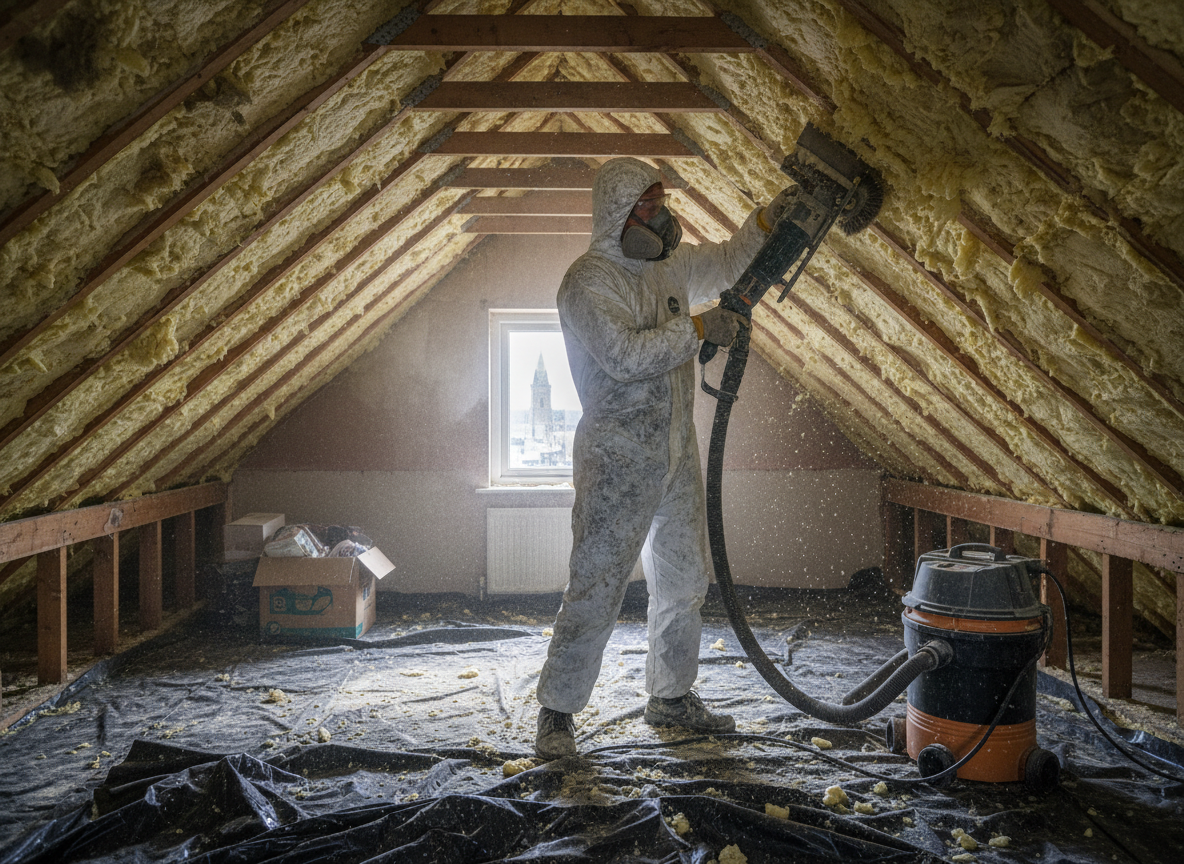
Grimsby homes, especially the older terraced stock near the docks and in areas like Nunsthorpe and Scartho, often have spray foam applied directly to roof voids or between joists. Removing it requires careful cutting and vacuum extraction to avoid disturbing original lath and plaster ceilings or the timber frame that has sat under the foam for years. Coastal humidity means any residual moisture left behind quickly leads to mould on the exposed brick or timber once the foam is gone.
The work starts with full containment sheeting because foam dust travels easily through the narrow hallways and stairwells typical of Grimsby terraces. Technicians cut the foam into manageable sections rather than ripping it, reducing the risk of pulling down wiring or pipework that runs through the void. In properties with limited loft access, sections are passed down through temporary hatches cut in the ceiling and rebuilt afterwards.
After removal the void is left clean and dry so the homeowner can choose new insulation or leave it open for inspection. Any hidden damp patches on the brickwork become visible only once the foam is gone, which is why a thorough check of the roof timbers and wall plates is carried out before the job finishes.
Seasonal Considerations
Winter calls in Grimsby often involve working around frozen pipes that run through the foam, while summer jobs contend with higher dust levels that settle on the streets below the scaffold.
Technician insight
In Grimsby, the thing that catches most people out with Residential Spray Foam Removal is how the older brickwork in terraces along the docks has absorbed salt air for decades, so once the foam comes off you often find the mortar joints are softer than expected and need gentle handling.
How it works
- 1
Site Assessment
Walk through the property to map foam locations, check access points and note any wiring or pipework running through the treated areas.
- 2
Containment Setup
Seal off rooms with plastic sheeting and negative air units to keep dust contained within the work zone.
- 3
Foam Extraction
Cut foam into sections and remove using industrial vacuums, taking care around original timbers and ceilings.
- 4
Final Clean and Inspection
Vacuum all surfaces, check for remaining residue and confirm the void is ready for the next stage of work.
Pricing
Upfront quotes given after inspection; cost depends on foam depth, access difficulty and property size.