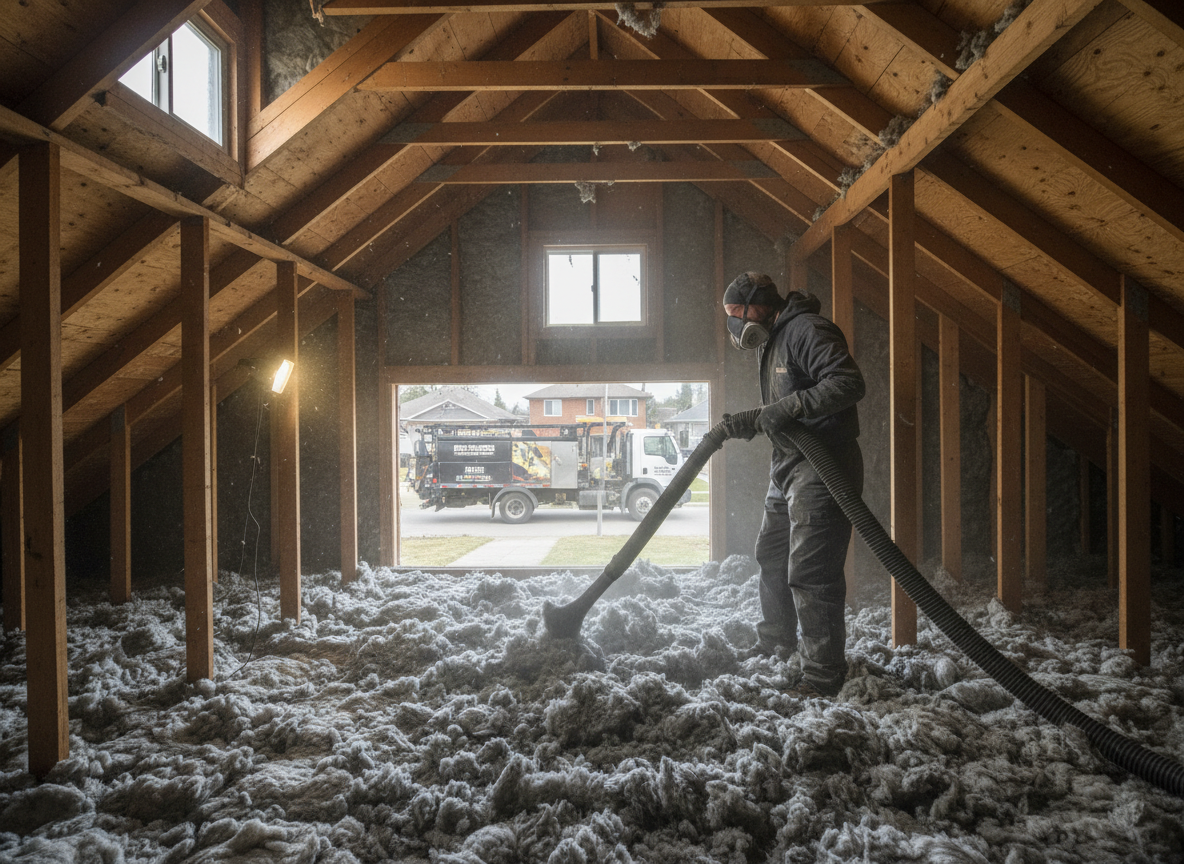
Spray foam insulation in Grimsby homes often consists of closed-cell polyurethane applied in lofts or under floors during energy upgrades on post-war and Victorian terraces common around Hainton Avenue and the docks. Over time this material can trap moisture against timber joists due to the region's frequent rainfall and coastal humidity, leading to rot that requires careful extraction to prevent further structural issues. Removal crews must separate the foam from lath and plaster ceilings without collapse, using negative air machines to control dust in confined roof voids typical of Lincolnshire terraces.
Edge cases arise in Grimsby when foam was sprayed over electrical cables or pipework in 1960s semis, creating fire and leak risks during extraction that demand sequential cutting and inspection. Local building regulations require proper waste classification for polyurethane offcuts before disposal at licensed sites, and crews routinely check for hidden condensation points exacerbated by the flat terrain and poor drainage in some Grimsby streets. Homeowners attempting partial removal often leave residue that re-expands with temperature swings, so full extraction followed by ventilation upgrades is the standard approach here.
The process accounts for Grimsby's older housing stock where foam bonds differently to brick noggins versus modern timber frames, requiring varied blade and scraper techniques to avoid damaging original features. Seasonal work peaks after winter when frozen foam becomes brittle and easier to section, yet crews still contend with limited access in narrow loft hatches found in many DN32 properties. Thorough post-removal cleaning prevents particle migration into living spaces below, a frequent complaint in terraced rows where shared walls allow dust travel.
Technician insight
In Grimsby, the thing that catches most people out with insulation removal service is how spray foam in 1930s terraces along streets like Hainton Ave bonds to original lath and plaster, and the coastal damp makes any missed residue expand again within months. Homeowners often underestimate the hidden wiring and pipe runs running through the foam in these older builds, which forces slower hand work instead of quicker mechanical removal.
Loft Foam Removal in Central Grimsby
A homeowner reported persistent damp smells in a DN32 terrace loft. Inspection showed closed-cell foam trapping condensation against rafters. We sectioned and extracted the material by hand, cleared residue, and added vents to restore airflow, eliminating the moisture issue.
How it works
- 1
Initial Assessment
Inspect the property in Grimsby to identify foam type, depth, and any underlying moisture or wiring issues.
- 2
Site Preparation
Set up containment barriers and extraction equipment to protect the rest of the home during removal.
- 3
Foam Extraction
Cut and remove spray foam in sections while monitoring for structural elements in older Lincolnshire homes.
- 4
Cleanup and Disposal
Clear residue, ventilate the space, and handle waste according to local regulations.
- 5
Final Inspection
Check the area for remaining material and advise on any follow-up ventilation needs.
Pricing
Cost varies by property age, foam thickness and access difficulty; quotes follow on-site inspection.