2026-10-22 ·
What Influences Spray Foam Removal Costs in Lincolnshire Homes
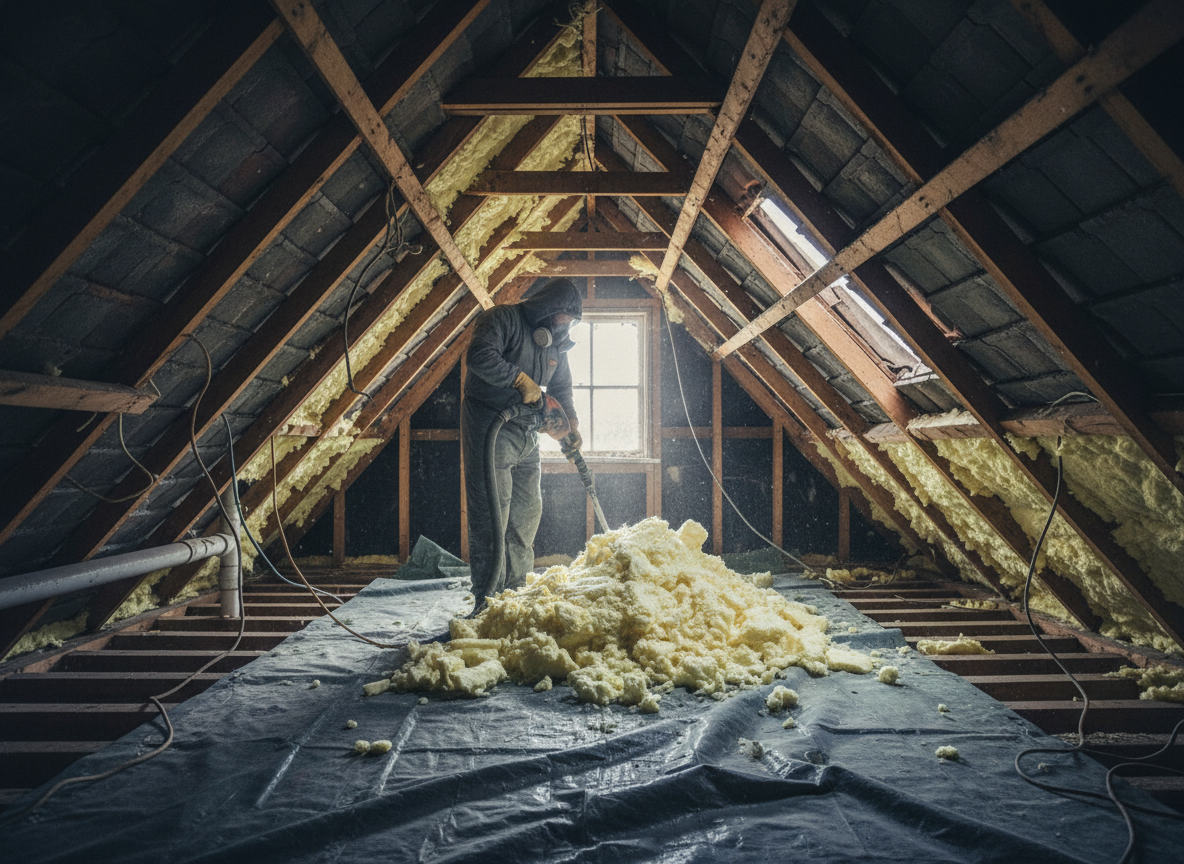
Spray foam removal costs in Lincolnshire homes typically range from 1,800 to 5,500 depending on property age, foam type, access difficulty and seasonal conditions. Older Grimsby terraced houses often require extra labour because the foam was applied directly to rafters decades ago. Coastal moisture accelerates adhesion problems, while tight lofts in Immingham and Cleethorpes limit equipment movement. Homeowners should expect higher totals when closed-cell foam needs mechanical scraping rather than simple peeling.
Property Age and Construction in Grimsby Terraces
Grimsby terraced houses built before 1960 frequently contain open-cell foam that has degraded unevenly due to decades of salt-laden air from the Humber estuary. These narrow roof voids demand hand tools and extra time to avoid damaging original timber. Newer detached homes in Waltham or Laceby usually feature closed-cell applications that bond more aggressively to concrete or metal decking, raising removal time. The 24/7 team based at 18 Hainton Ave, Grimsby DN32 9BB routinely encounters both stock types and adjusts crew size accordingly. Why Spray Foam Fails in Older Grimsby Terraced Houses explains the material breakdown patterns seen across the area.
Foam Type and Thickness Variations
Open-cell foam, common in residential lofts, peels away faster than closed-cell material that was sprayed 100 mm or thicker in commercial conversions. Thickness directly influences labour hours because each additional 25 mm layer requires repeated passes with scrapers or thermal equipment. Properties near the docks in Grimsby often received heavier closed-cell applications for condensation control, pushing totals toward the upper end of the 1,800–5,500 range. Residential Spray Foam Removal outlines the different removal techniques matched to each foam category.
Access, Roof Pitch and Local Terrain
Steep pitches on Victorian terraces in central Grimsby limit scaffold placement and increase safety precautions. Flat-roof extensions common in Scunthorpe and Louth create drainage pockets where water pools against foam edges, softening the bond yet complicating dry extraction. Narrow alleyways behind Hainton Avenue properties restrict vehicle access, forcing crews to carry equipment by hand and extending job duration by half a day. Lincolnshire’s clay-heavy soil also means winter ground saturation can make ladder footing unstable on rear elevations.
Seasonal Weather and Moisture Effects
Lincolnshire winters bring prolonged damp periods that soften foam edges, sometimes allowing quicker initial removal but leaving residue that must be cleaned before new insulation. Summer heat expands closed-cell foam, making it more brittle and prone to crumbling into fine particles that require extra vacuuming. Homeowners scheduling work between October and March should budget for potential delays when high winds off the North Sea prevent external access. These patterns explain why quotes obtained in spring often differ from those issued after heavy rainfall.
Removal Method and Waste Disposal
Dry ice blasting reduces dust in occupied lofts but adds equipment hire costs, while mechanical scraping remains cheaper yet messier in confined spaces. Waste from Grimsby jobs must travel to licensed Lincolnshire disposal sites, and closed-cell material weighs significantly more per square metre, increasing haulage fees. Dry Ice Blasting Spray Foam Removal details when this method becomes cost-effective for larger attic volumes.